
Heating Repair & Installation in Lowell, MA
Furnaces and boilers, from a no-heat call on a January morning to a full replacement in an older Lowell home.
Heating is the main job of a heating and cooling company in Lowell. Winters run from November into April, and older houses here, from triple-deckers to Victorian-era homes, often still have the boilers and radiators they were built around, sometimes converted from coal to oil to gas over the decades. Newer houses in the surrounding towns are more likely to have a furnace and ductwork. We work on both, and on most major brands: gas and oil furnaces, hot-water and steam boilers, and wall-hung condensing boilers.
A furnace that will not start is the classic call. We will ask the right questions on the phone, try to fit urgent no-heat problems in as quickly as possible, and explain what we find in plain language once we are there.
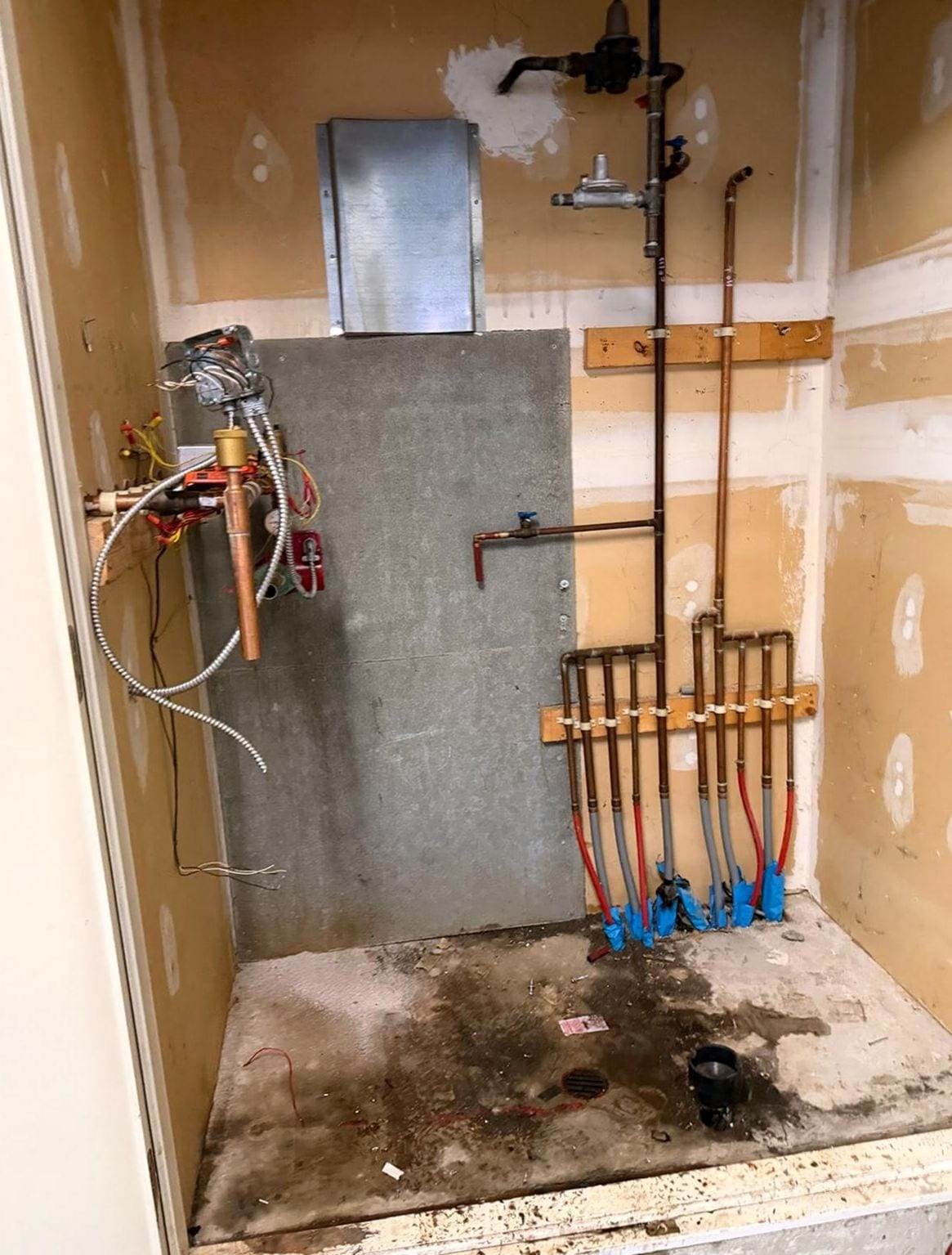
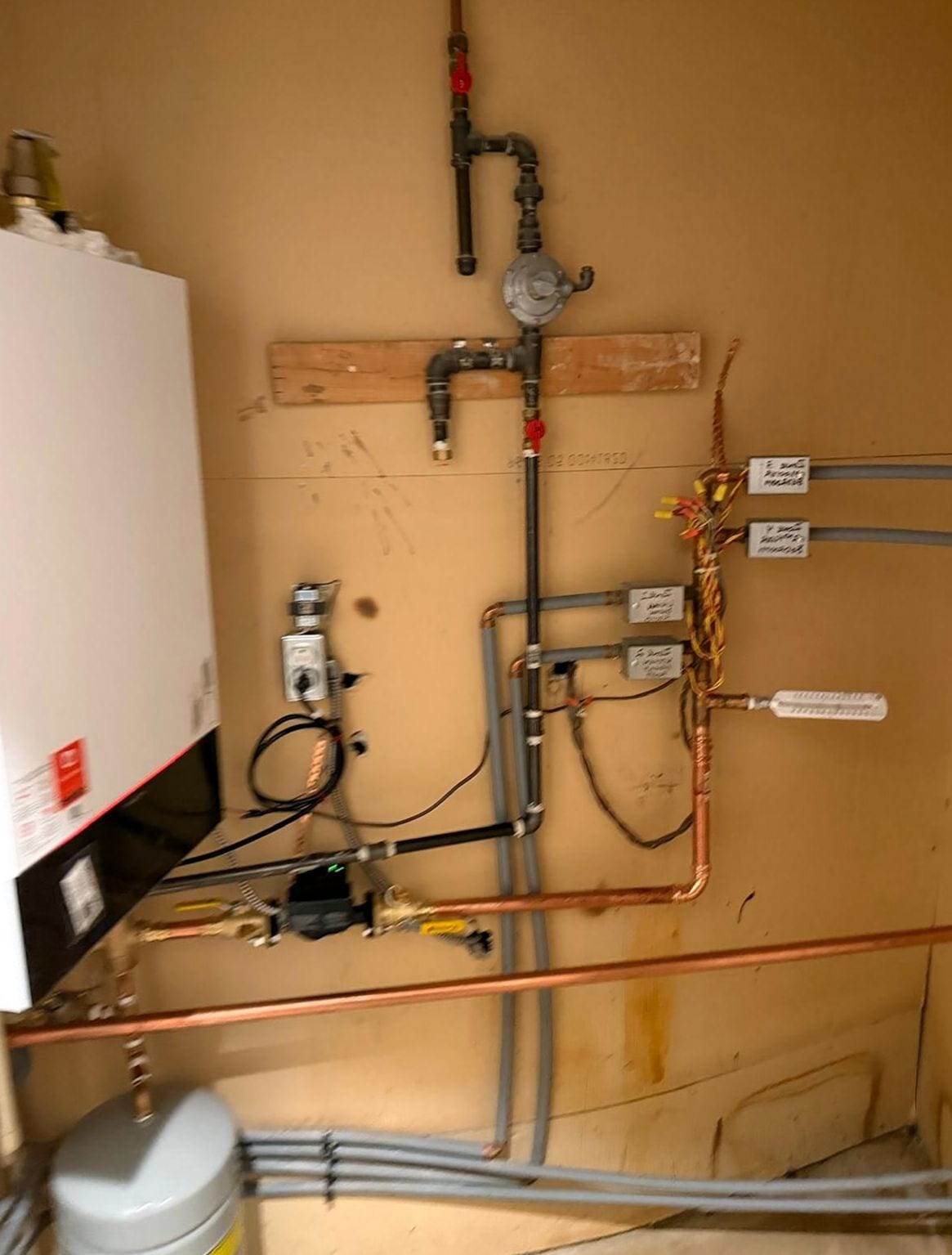
No-heat warning signs
- The furnace or boiler will not start, or starts and shuts off again within a minute or two.
- Some radiators or baseboard loops heat while others stay cold.
- The boiler pressure gauge reads below about 12 psi, or climbs toward 30 psi and the relief valve drips.
- On a steam boiler, the water in the sight glass is low or bouncing, or the pipes bang when the heat comes on.
- A gas flame that burns yellow or lazy instead of crisp blue.
- Soot around an oil burner, a smell of oil, or a small bang when the burner lights.
- The system short-cycles, or the house never quite reaches the thermostat setting.
- New noises: booming at ignition, a screeching blower, or a boiler that rumbles like a kettle.
- A carbon monoxide alarm sounds. Get everyone out first, then call 911.
Quick checks before you call
Make sure the thermostat is set to Heat and above room temperature, and that its batteries are good. Look for the emergency switch, which looks like a light switch, often with a red plate, at the top of the basement stairs or on the unit itself, and make sure nobody turned it off. Check the breaker, the oil tank gauge and the furnace filter. After a snowstorm, look at the side of the house: a high-efficiency furnace or boiler shuts down when snow blocks its plastic intake and exhaust pipes. And press an oil burner's reset button once at most.
Gas, oil, electric or propane: how they compare
The fuel you have shapes which equipment makes sense and what it costs to run. Prices move from year to year, so this table compares the factors rather than the numbers.
Swipe the table sideways to see every column →
| Fuel | Typical equipment | Efficiency | Cost and upkeep factors |
|---|---|---|---|
| Natural gas | Furnaces and boilers, including wall-hung condensing boilers | About 80% for standard units, 90% to 98% for condensing units | Needs a gas main on the street; no tank or deliveries; condensing units vent through the wall in plastic pipe |
| Heating oil | Boilers and furnaces, common in older Lowell homes | Roughly 80% to 87% for most systems | Tank on site and scheduled deliveries; needs a yearly cleaning; fuel price swings with the market |
| Electric resistance | Baseboard heaters, wall heaters, electric furnaces | 100% at the heater, with nothing burned on site | Simple and quiet, but usually the most expensive way to heat with Massachusetts electric rates |
| Propane | Furnaces and boilers where there is no gas main | Similar to natural gas equipment | Tank on the property and deliveries; usually costs more per unit of heat than natural gas |
| Electric heat pump | Ducted or ductless cold-climate heat pumps | Two to four units of heat per unit of electricity | Also cools in summer; output drops on the coldest nights; see heat pumps |
Boiler or furnace?
Boilers
- Heat water (or make steam) for radiators, baseboard or radiant floors
- Quiet, even heat with no blowing air
- Can also heat domestic hot water through an indirect tank
- No ducts, so cooling has to come from somewhere else
Furnaces
- Heat air and push it through ductwork
- Share the ducts and blower with central air
- Recover quickly after a setback
- Can dry the air in winter without humidity control
Most Lowell radiator houses stay with a boiler when the old one fails. Owners who also want cooling often keep the boiler and add a heat pump or mini-splits for summer and the shoulder seasons.
Replacing a furnace or boiler
A replacement should be sized to the house, not copied from the old nameplate; many older boilers were oversized from the day they went in. We look at the heat loss of the house, the condition of the chimney or the route for new venting, the near-boiler piping, the zones and the controls, and we explain the options before you decide. In Massachusetts, gas piping work needs a permit and a licensed gas fitter, and an inspector checks it before the gas is turned on. After start-up, the burner is tested for safe, clean combustion and every safety control is checked.
Heating questions
Should I convert from oil to gas?
Start with three questions. Is there a gas main on your street? The gas company can tell you whether service is available and what bringing a line to the house involves. How old is the oil equipment? If the boiler or furnace is young and healthy, there is no rush. And how will the new equipment vent? Older chimneys usually need a liner for gas, while a high-efficiency condensing unit vents through the side wall in plastic pipe instead.
The old oil tank has to come out properly; in Massachusetts that involves a permit from the local fire department. If your oil system is near the end of its life, it is the right moment to compare gas, a new oil system and a heat pump side by side.
Boiler or furnace: which one is better?
Neither, on its own; it depends on what the house already has. A boiler heats water or makes steam for radiators, baseboard or radiant floors, and it is quiet and even. A furnace heats air and sends it through ducts, which lets it share those ducts with central air. In a radiator house, replacing a boiler with a boiler is almost always simpler than adding ductwork for a furnace.
When should I schedule a heating tune-up?
Late summer to early fall, before the first cold snap and before the busy season. Oil systems need it every year, because soot builds up on the heat exchanger and the nozzle and filter wear out. Gas furnaces and boilers also benefit from a yearly check of the burner, ignition, venting and safety controls. See the maintenance calendar.
Some of my radiators stay cold. What does that mean?
On a hot-water system it is often air trapped at the top of the radiator, which bleeding fixes, or low system pressure, a circulator pump or a zone valve. On a steam system, never bleed a radiator; a cold steam radiator usually points to a stuck air vent, a radiator pitched the wrong way, or a boiler water problem.
Is it safe to keep pressing the reset button on my oil burner?
No. Press it once. If the burner locks out again, call. Each press can pump unburned oil into the combustion chamber, and a chamber full of oil can light off with a bang, the "puffback" that coats a basement in soot.
How long does a furnace or boiler last?
As a rough guide, furnaces often run 15 to 20 years, wall-hung condensing boilers about as long with yearly maintenance, and cast-iron boilers frequently longer. Age alone is not a reason to replace a system that is safe and running well; repeated breakdowns, rising fuel use and safety problems are.